On this page
The Short Answer
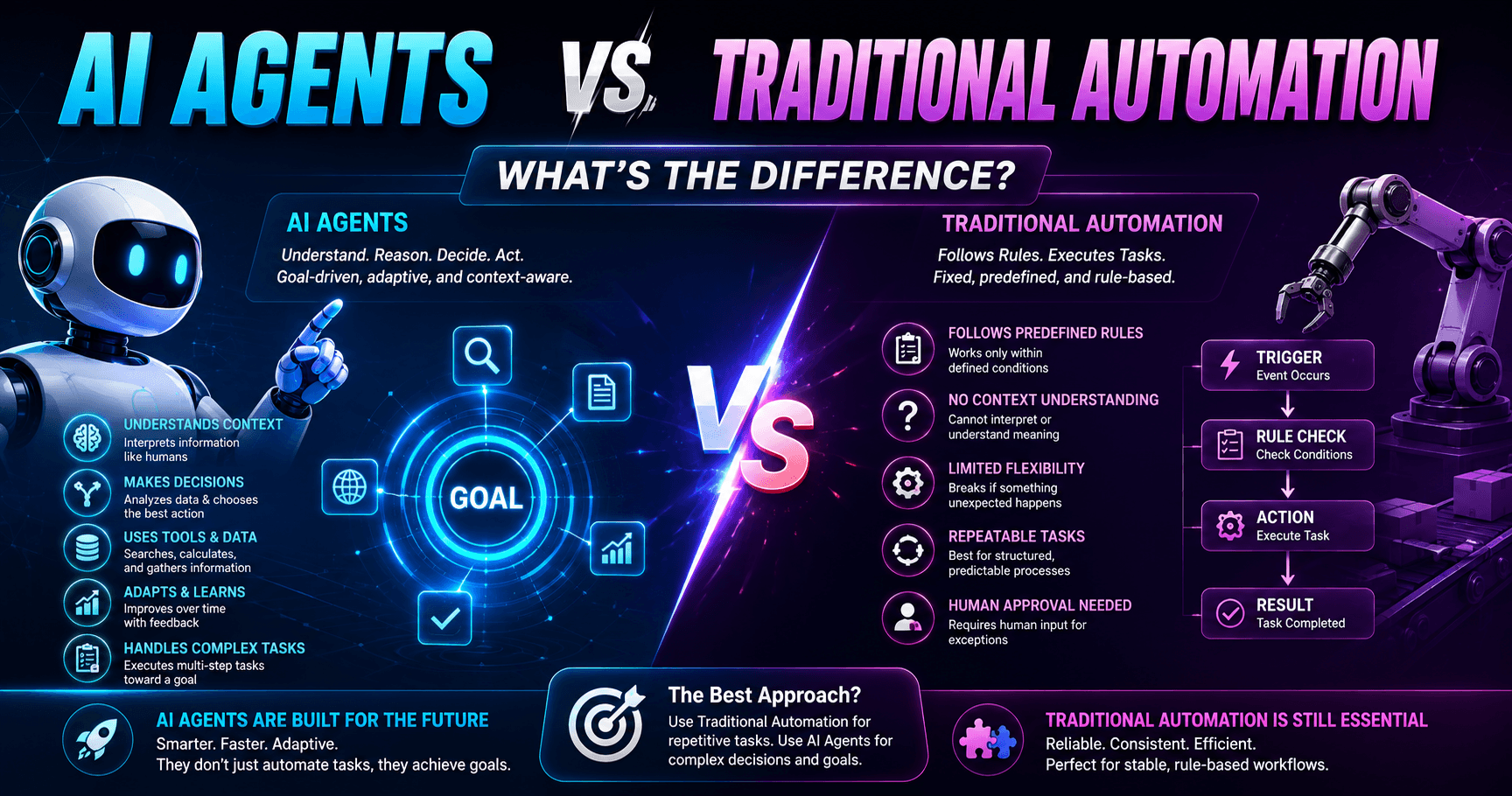
AI agents are usually priced per use or by subscription, and excel at repetitive, structured, high-volume tasks — browsing, filling forms, scheduling, multi-step workflows with clear inputs and outputs. Human virtual assistants are billed by the hour or month at rates that vary widely with location and specialization, and excel at judgment, relationship-building, and the kind of nuanced problem-solving that doesn't reduce cleanly to a script. Most businesses in 2026 use both: AI handling the repetitive layer, a human VA handling everything that needs real judgment.
What Each One Actually Costs
Human virtual assistants are typically billed hourly or as a flat monthly retainer. Rates vary widely by location and specialization, from low hourly rates for offshore assistants to several times that for specialized US-based VAs. AI agents are priced differently — per use or by subscription rather than per hour. Intercom, for example, prices its Fin AI agent at $0.99 per outcome, while general-purpose AI assistants are sold as monthly subscriptions. Specialized AI tools built for a specific use case run higher, typically $500-$2,000 a month.
Source: Anthropic — Plans & Pricing | Claude.
What Each One Is Actually Good At
- AI agent: repetitive, structured, high-volume tasks with clear inputs and outputs — browsing the web, filling out forms, scheduling actions, looping through a defined multi-step workflow the same way every time.
- Human VA: nuance, judgment calls, relationship-sensitive communication, and multi-step problem-solving where the right next step isn't predictable in advance.
The dividing line isn't "simple vs complex" so much as "predictable vs judgment-dependent." A task can be complicated and still be a good fit for an AI agent, as long as the steps are consistent every time.
Why Most Businesses End Up Using Both
A virtual assistant who actively uses AI tools in their own workflow tends to work noticeably faster than one working entirely manually. In one large study of support agents, an AI assistant raised issues resolved per hour by 14% on average, and by 34% for newer workers (NBER Working Paper 31161). That's usually the most practical starting point: not choosing between an AI agent or a human VA, but giving an existing VA AI tools for the repetitive share of their work and keeping their judgment for everything else.
Quick Comparison at a Glance
Figures last checked: October 2026 — against public pricing pages and published 2026 industry rate guides.
| AI Agent | Human Virtual Assistant | |
|---|---|---|
| Typical cost | Per use or monthly subscription | Hourly or monthly; varies widely by location |
| Best at | Repetitive, structured, high-volume tasks | Judgment calls, relationship-sensitive work |
| Consistency | Identical every time | Varies with context and judgment |
| Availability | 24/7 | Scheduled hours (unless overlapping shifts) |
This ties directly into our Virtual Assistants service, where we go deeper on scope, process, and cost.
We go deeper on automation for Professional Services businesses on our dedicated industry page.