On this page
The Short Answer
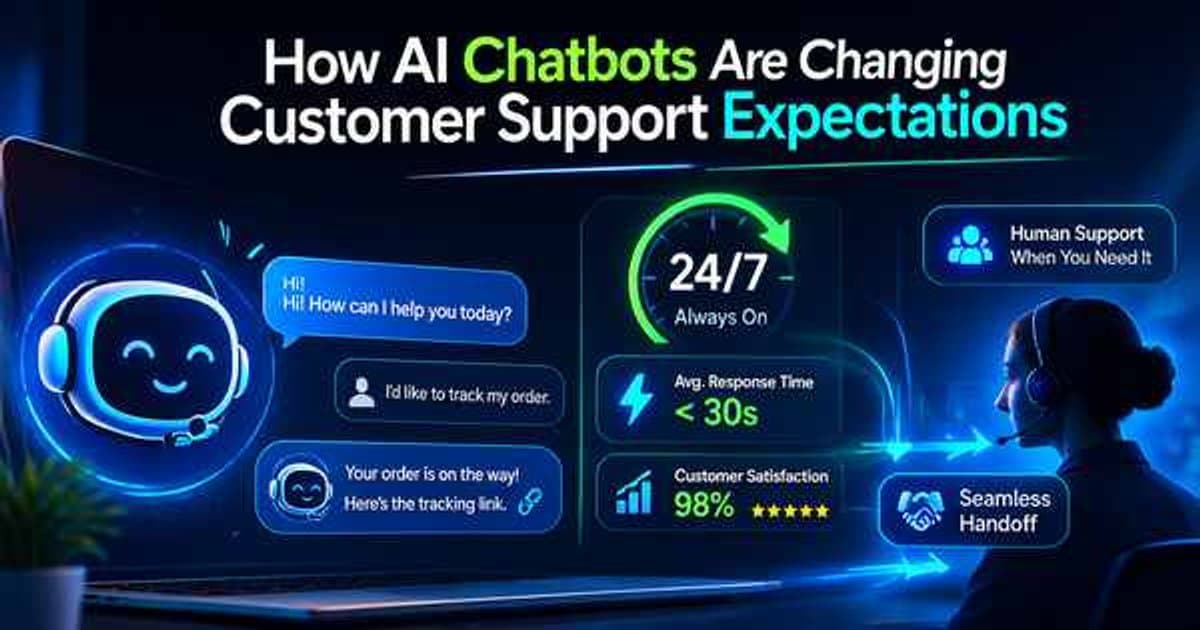
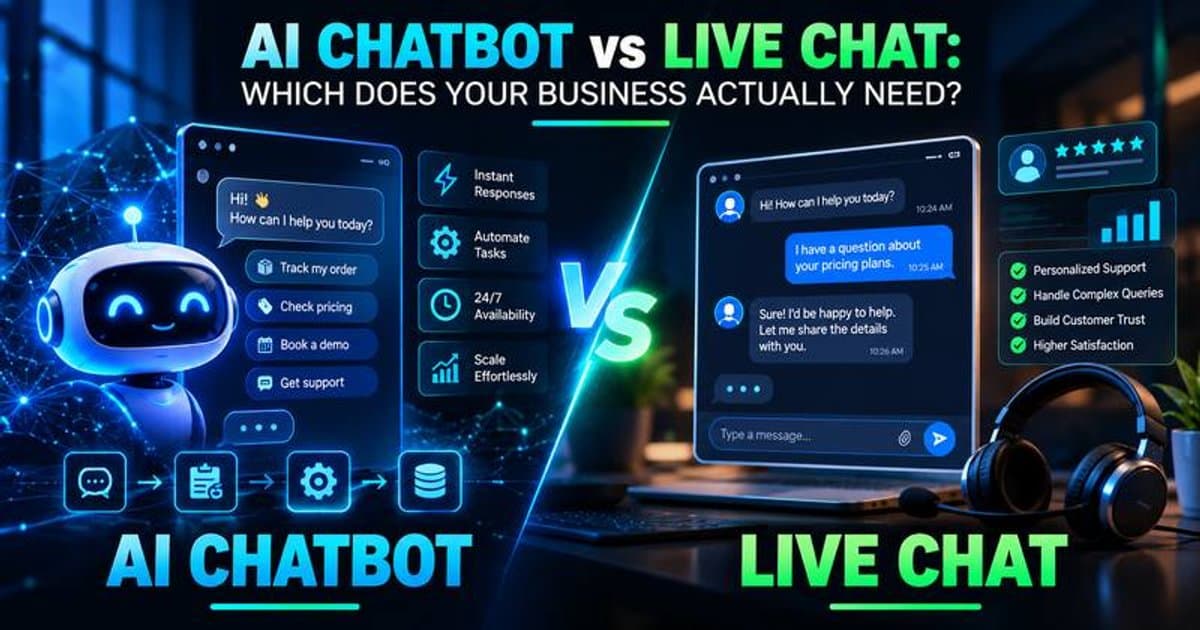
AI chatbots reply within seconds and can answer the routine, repetitive share of questions instantly, at any hour. Live chat with a human agent has a slower first response, especially during busy periods, but handles nuance, frustration, and anything outside a defined script far better. Most businesses in 2026 don't pick one or the other: they use AI for the routine questions and route anything complex or sensitive to a human.
Response Time and Availability
The gap here is the starkest difference between the two. AI chatbots reply within seconds and don't queue conversations the way a human team does when volume spikes, and they're available around the clock without staffing. Live chat with a human agent takes longer to respond, and resolving a full conversation often takes several minutes — reasonable for a single agent, but it doesn't scale the same way when volume spikes or support needs to run overnight.
Source: LiveChat — Customer Service Report (2024).
What Each Option Actually Costs as Volume Grows
A single live-chat agent can realistically handle a few thousand conversations a month before response times start slipping. AI chatbot pricing is either a flat subscription or usage-based. Intercom, for example, prices its Fin AI agent at $0.99 per outcome. So the break-even point against another support hire depends on your volume and the pricing model. At low volume, a human-only setup is often simpler; as volume grows, the math increasingly favors AI handling the routine share.
What Each One Actually Handles Well
- AI chatbot: repetitive questions with a clear, scriptable answer — order status, business hours, pricing tiers, password resets, common how-to questions.
- Live chat (human): frustration, ambiguity, anything that needs judgment, and situations where getting it wrong has real consequences, like billing disputes or anything emotionally charged.
In many support inboxes, a large share of incoming questions fall into the first category once a business actually looks at its support volume — which is why AI handling just that slice, and handing off the rest, tends to outperform an all-or-nothing approach in either direction.
Quick Comparison at a Glance
Figures last checked: October 2026 — against public pricing pages and published 2026 industry rate guides.
| AI Chatbot | Live Chat (Human) | |
|---|---|---|
| Response time | Within seconds | Slower; depends on staffing and queue |
| Availability | 24/7, no staffing | Limited to staffed hours |
| Cost at volume | Subscription or per-use pricing | Scales with headcount |
| Best at | Repetitive, scriptable questions | Nuance, judgment, sensitive situations |
This is part of our Customer Support service — see how it works, what's included, and what it typically costs.
Running a business in this sector? See how this applies in our guide to AI automation for Hospitality.