On this page
The Short Answer
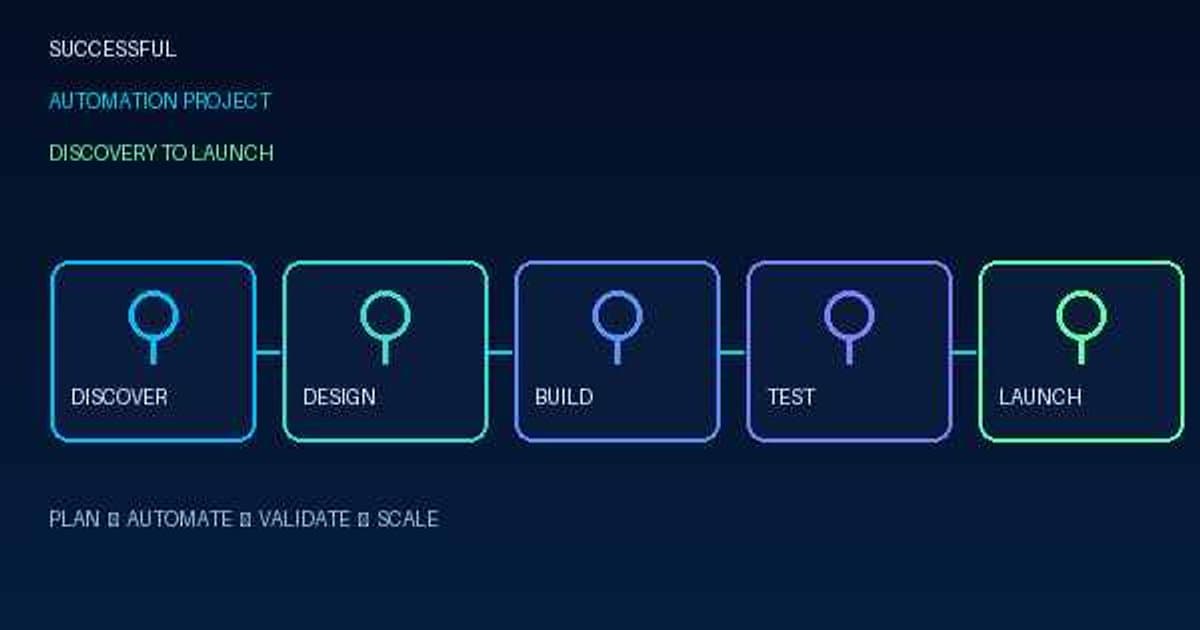
A successful automation project runs in four stages: discovery of how the process really works, a first version scoped small enough to ship, a build that involves the people who will use it, and close monitoring after launch. Rushed discovery is the most common reason projects underdeliver; treating launch as the finish line is how they quietly stop working.
Discovery: Understanding Before Building Anything
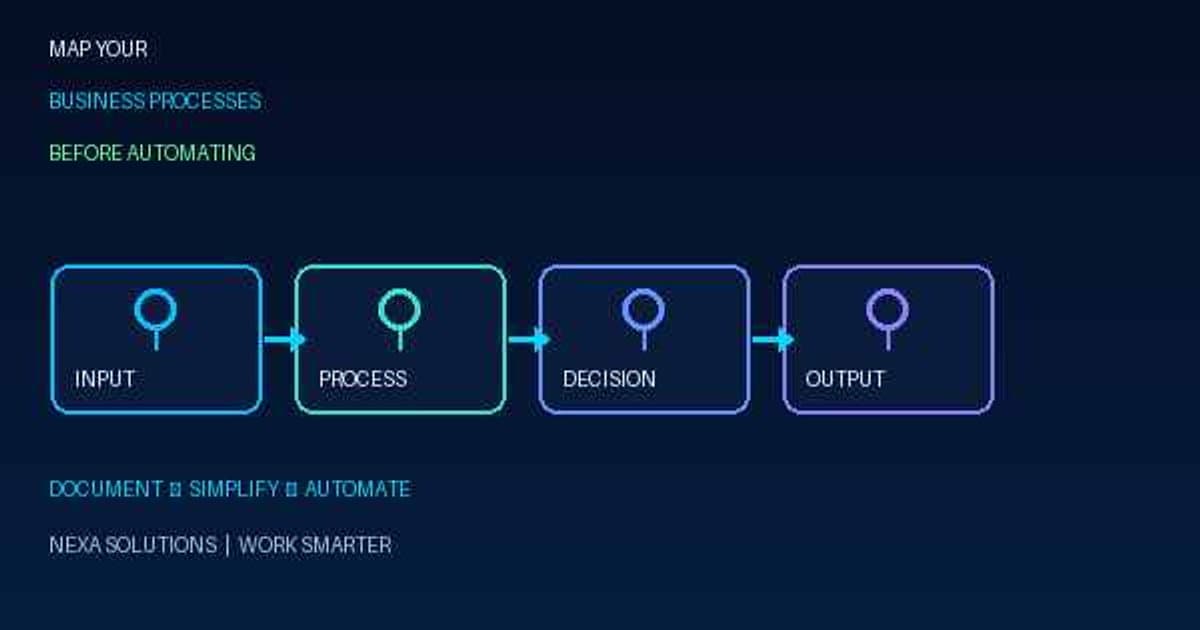
The strongest projects start by understanding how a process actually works today — not the idealized version, the real one, including the manual workarounds nobody talks about. This phase is about asking questions, not proposing solutions yet.
Skipping or rushing discovery is one of the most common ways automation projects underdeliver — the tooling gets built correctly, but for the wrong version of the process.
Source: ASQ (American Society for Quality) — What is a Flowchart?.
Scoping a First Version That's Small Enough to Ship
Rather than trying to automate an entire process end-to-end on the first attempt, successful projects scope a first version narrow enough to launch quickly and prove the concept — then expand from there based on what's actually learned in production.
This matters because real usage always surfaces edge cases a planning document couldn't anticipate. A smaller first version means those edge cases get caught early, when they're cheap to fix.
Building With the Team, Not Just For Them
The people who'll actually use or be affected by an automation should be involved throughout the build, not just informed at launch. Their day-to-day knowledge of edge cases and exceptions is usually more accurate than any process document.
This involvement also matters for adoption — a system people helped shape is a system they trust, which meaningfully affects whether it actually gets used after launch.
Source: McKinsey & Company — The people power of transformations (February 2017).
Launch Is the Start of the Project, Not the End
The most successful automations are monitored closely in their first weeks, with quick adjustments made as real-world usage reveals gaps that testing didn't catch. Treating launch as the finish line, rather than the beginning of an iteration cycle, is how promising projects quietly stop working a few months in.
Ongoing monitoring and periodic review — checking that the automation still matches how the business operates — is what keeps a system useful well after the initial excitement fades.
Source: NIST — Artificial Intelligence Risk Management Framework (AI RMF 1.0), MANAGE 4.1 (January 2023).
Curious how this fits together in practice? Our AI Automation service walks through the process and typical pricing.
Running a business in this sector? See how this applies in our guide to AI automation for Manufacturing.