On this page
The Short Answer
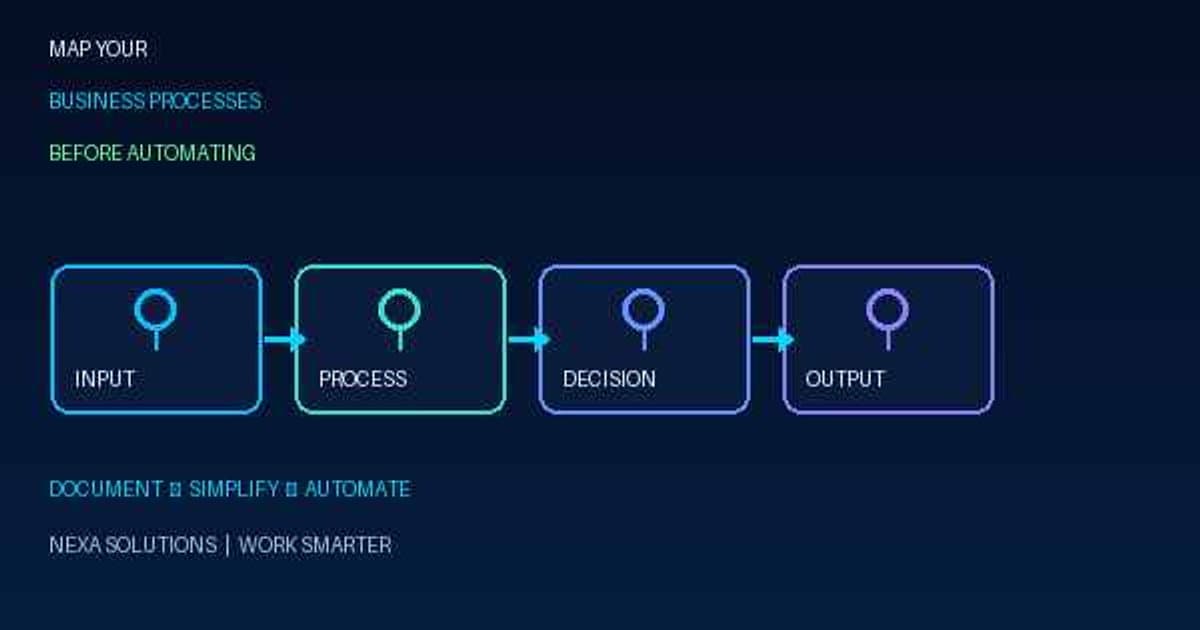
Map a process before you automate it. Write down every step as it actually happens, including who does it, which tool they use and how long it takes. Then flag steps that involve waiting, re-entering information or manual handoffs, and prioritize by impact: multiply how often a step happens by how long it takes, and automate the highest score first.
Why Mapping Comes Before Automating, Not After
It's tempting to jump straight to tooling — pick a platform, connect two apps, call it done. But automation only works well when it's automating the right process, and most businesses have never actually written down how a process really happens versus how they assume it happens.
Mapping first isn't bureaucracy for its own sake. It's the fastest way to spot the unnecessary steps, the manual workarounds, and the single points of failure that would otherwise get baked directly into whatever you automate.
Step One: Write Down What Actually Happens
Pick one process — lead intake, order fulfillment, onboarding a new client — and write down every single step exactly as it happens today, not how it's supposed to happen. Include who does each step, what tool they use, and how long it typically takes.
This step alone usually surfaces surprises. Teams are often unaware of the manual workarounds a colleague has quietly built to cover a gap in the "official" process.
Step Two: Mark Where the Friction Is
Go back through the map and flag every step that involves waiting, re-entering information, or a manual handoff between people or tools. These are your candidates for automation — not because they're difficult, but because they're predictable enough to hand to a system.
Steps that require judgment, negotiation, or relationship-building should stay with a person. The goal isn't to automate everything, it's to automate the parts that don't need a human making the call.
Sources: ASQ (American Society for Quality) — What is a Flowchart?; McKinsey Global Institute — Harnessing automation for a future that works (January 2017).
Step Three: Prioritize by Impact, Not Ease
It's tempting to automate whatever's easiest first, but the highest-value target is usually whichever friction point costs the most time or creates the most downstream errors — even if it's slightly more complex to build.
A simple way to prioritize: multiply how often a step happens by how long it takes, then rank by that number. The step with the highest score is almost always worth automating first.
We cover this in more depth as part of our AI Consulting work — explore the full scope and how pricing typically breaks down.
We go deeper on automation for Finance businesses on our dedicated industry page.