On this page
The Short Answer
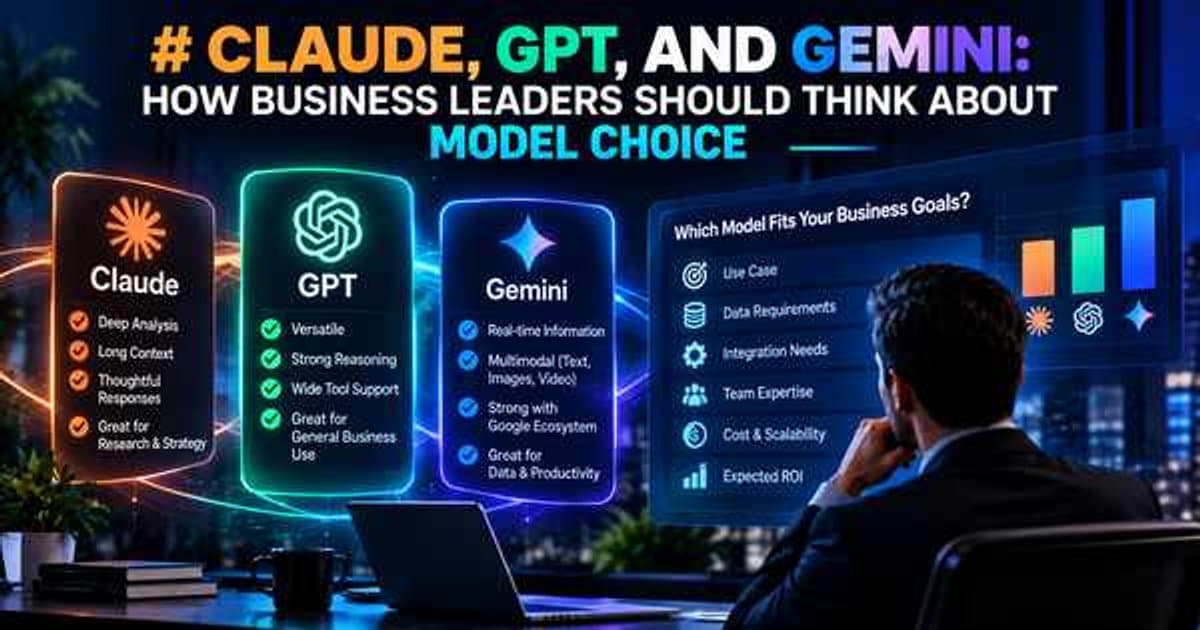
There is no single best model. The differences that matter for a business are reasoning consistency on multi-step tasks, how well a model follows detailed instructions, cost per request at scale, and data handling, which vary by use case. The more durable decision is building systems that can swap the underlying model without a full rebuild.
"Which Is Best" Is the Wrong Question
Model leaderboards change constantly, and the gap between leading models on any given benchmark is often smaller than it looks in a headline. For most real business applications, the difference between the top few models matters far less than how well the system around the model is designed.
A better question is: which model fits this specific task, at this cost, with this level of reliability — because the right choice usually varies by use case, not by whichever model is winning this month's benchmark.
Source: Stanford HAI — The 2025 AI Index Report (2025).
What Actually Differs Between the Major Models
In practice, the meaningful differences show up in things like reasoning consistency on complex, multi-step tasks, how well a model follows detailed instructions, cost per request at scale, and how each provider handles safety and data handling — not in generic "which one is smarter" comparisons.
Different models also have different strengths for different formats — some are stronger at structured data extraction, others at open-ended writing or coding, and that variation matters more for a specific workflow than an overall ranking does.
Sources: Anthropic — Pricing - Claude API Docs; Google AI for Developers — Gemini Developer API pricing.
Why It's Worth Designing Systems That Aren't Locked to One Model
Because the landscape shifts quickly, the more durable decision is building automation and agent systems that can swap the underlying model without a full rebuild, rather than betting your entire workflow on one provider indefinitely.
This is one of the reasons we build with APIs and integration layers that abstract the model choice — it protects the business from having to redo work every time a new model release changes the calculus.
The Practical Takeaway for Non-Technical Leaders
You don't need to track every model release to make good decisions here. What matters is partnering with a team that evaluates model choice against your actual use case and revisits that choice periodically, rather than treating it as a one-time decision made in isolation.
The technology will keep changing. The businesses that benefit most are the ones whose systems were built to change with it.
This is part of our AI Consulting service — see how it works, what's included, and what it typically costs.