On this page
The Short Answer
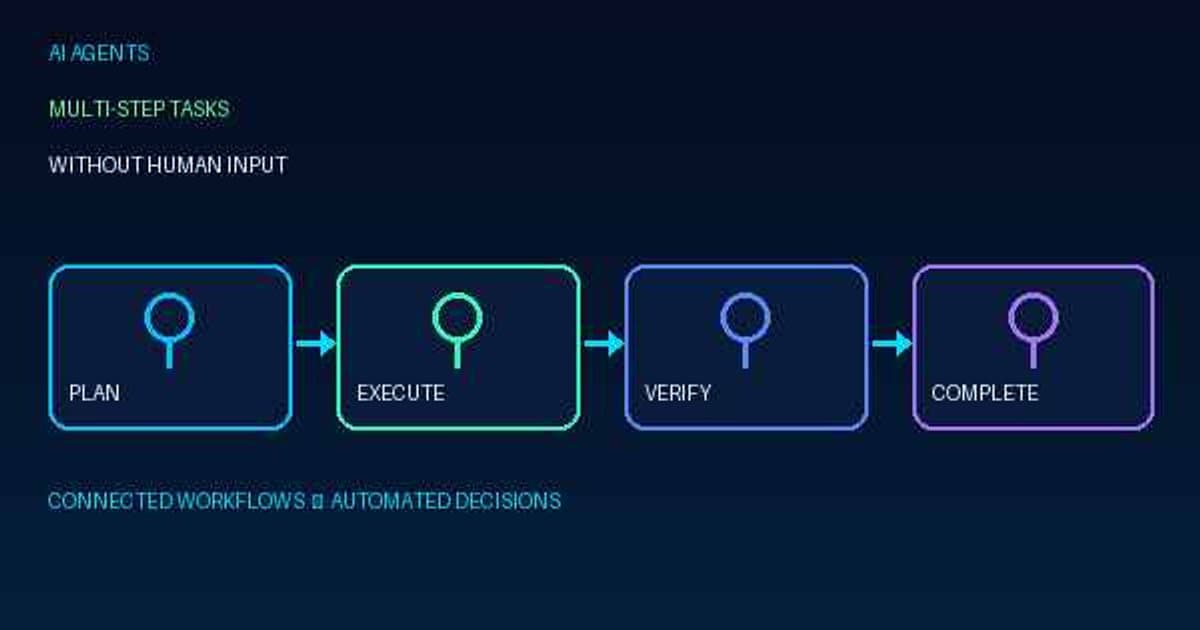
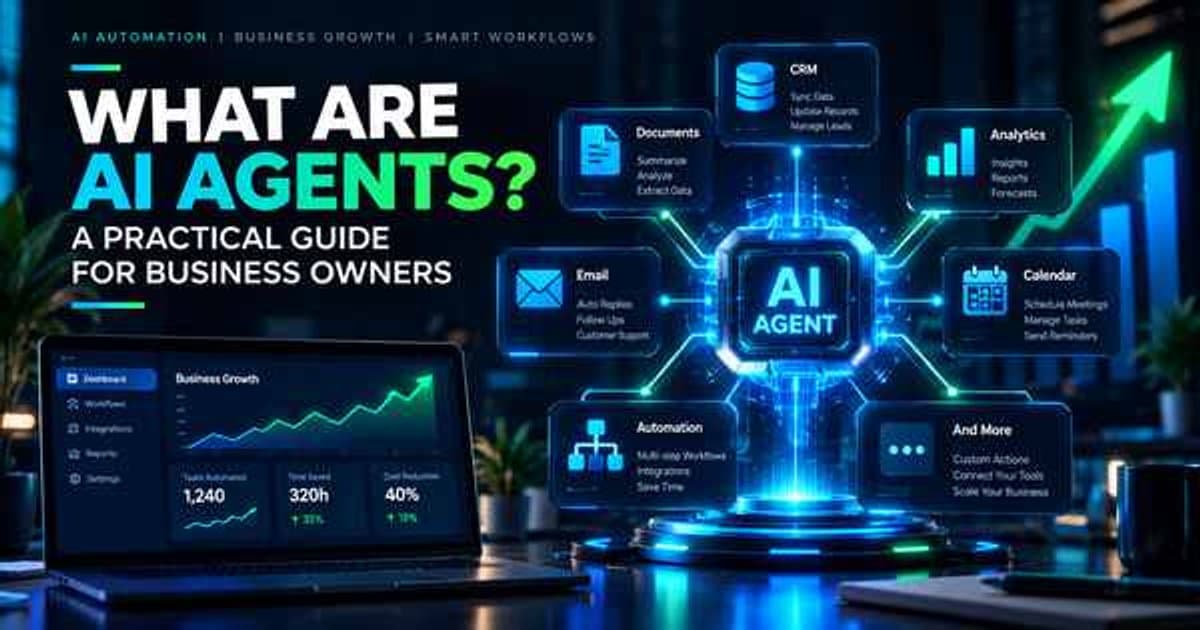
An AI agent is software that can understand context, decide which steps a task needs, carry them out using connected tools, and adjust when something unexpected happens. Unlike a chatbot, which answers questions from a script, an agent completes a task end to end within defined guardrails, handing off to a person when a request falls outside its scope.
An Agent Is Not Just a Smarter Chatbot
A traditional chatbot follows a script: it matches a question to a pre-written answer, and breaks down the moment a conversation goes off that script. An AI agent works differently — it can understand context, decide what steps are needed to complete a task, take those steps using connected tools, and adjust if something doesn't go as expected.
The distinction that matters most for a business owner isn't technical, it's practical: a chatbot answers questions, while an agent can complete an entire task end-to-end, from gathering information to updating a system to confirming the outcome.
Source: Google Cloud — What are AI agents? Definition, examples, and types (April 2026).
What an Agent Can Actually Do Within Its Scope
Within a clearly defined scope, an agent can gather information from a customer, look up an order or account status, make a decision based on policy, update a CRM or ticketing system, and confirm the outcome back to the person — all without a human touching each individual step.
That scope is the important part. A well-built agent isn't given open-ended authority; it operates inside guardrails that define exactly what it can and can't do, and it hands off to a human the moment a request falls outside that boundary.
Source: OpenAI — A practical guide to building agents (2025).
Where Agents Create the Most Value
Agents are most valuable wherever a task is repetitive enough to define clearly, but variable enough that a rigid script keeps breaking. Lead qualification is a common example — every conversation is slightly different, but the underlying steps (ask questions, assess fit, route appropriately) are consistent.
Support triage, appointment scheduling, order status lookups, and internal request handling all share that same shape: predictable structure, unpredictable specifics — exactly the gap agents are built to close.
Where to Start If You're Considering One
The businesses that get the most out of agents don't start by trying to automate everything at once. They start with one clearly bounded task — a specific type of question, a specific process — get it running reliably, and expand from there.
That narrow starting point also makes it much easier to build trust in the system internally, since your team can see exactly what the agent is doing and verify it's working correctly before handing over more responsibility.
Source: Anthropic — Building effective agents (December 2024).
We cover this in more depth as part of our AI Agents work — explore the full scope and how pricing typically breaks down.
We go deeper on automation for Real Estate businesses on our dedicated industry page.